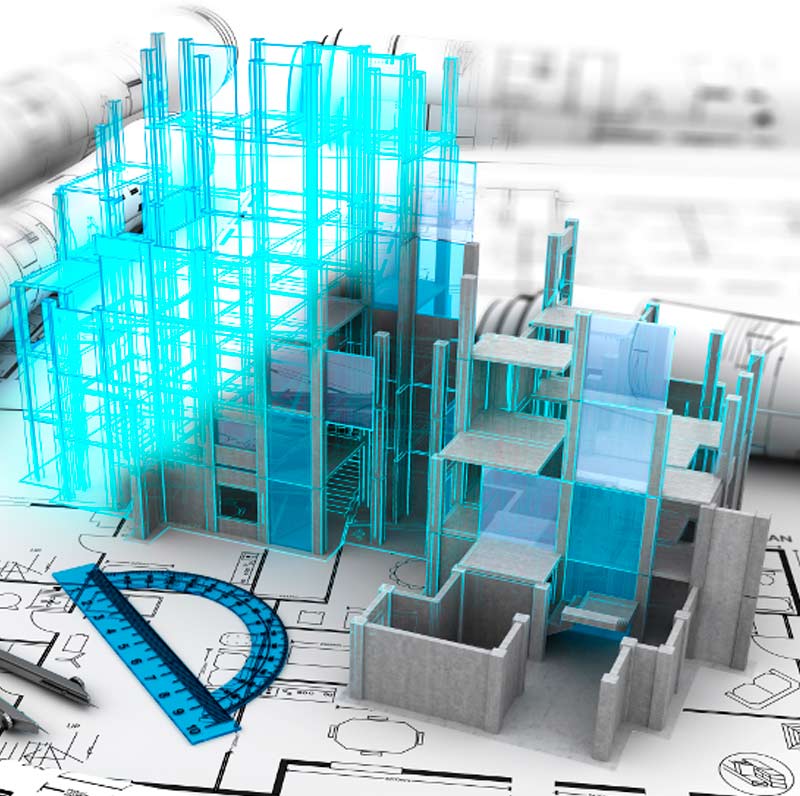
The evolution of software tools is aligned with information protocols that are developed in each project carried out, and continue to constantly evolve until they are polished to what we could call relative perfection.
At the end of the day, it's all in the detail of each architectural and construction project; Precisely, construction information modeling adds new elements to further facilitate the task of the parties involved, with the aim of leaving satisfied customers.
BIM is superior, for the simple fact that it allows three-dimensional representations of the work, with its economic and time calculations for each project. Everyone involved will be able to work on the same model, and with the empowerment of the cloud and AI, it could be even more beneficial. One of the keys lies in the good use of the central model databases, sharing documentation between all project workers and administrators.
Regarding the sharing of information between models, it is possible as long as the protocols are delimited. It is an indisputable fact that many projects are already being carried out with BIM methodology – or at least BIM models are being developed. And with all this, when bidding for a work, the documentation that usually reaches construction companies to analyze the tender and prepare the offer is usually PDFs, DWGs and Excels generated by the different measurement software. Many times they also have the project BC3. IFCs rarely reach subcontractors and when they do send them, they are usually only architectural. A negligible and insignificant percentage (<1%) corresponds to the sending of natives.

When construction companies are studying a work to give a price, they send the subcontractors the documentation set out above so that they can bid on the chapters of their competence. Many times, to speed up the writing of the offer, the construction companies themselves filter the information and send the installers only the measurements and plans that affect them. Why not send all the information you have? We no longer need to spend ink and pages on printing or physical spaces to store files; We only need to share a few megabytes of information.
If the project has been carried out in BIM, at least one model should exist; This model will contain more or less information, information that, whatever its type, may be useful to professions that at first glance it does not affect. Why not allow all agents access to BIM models? Each one will decide whether to use the DWG, PDFs or the model.
